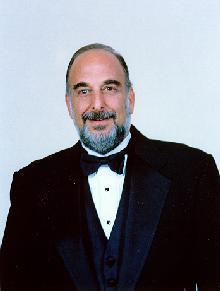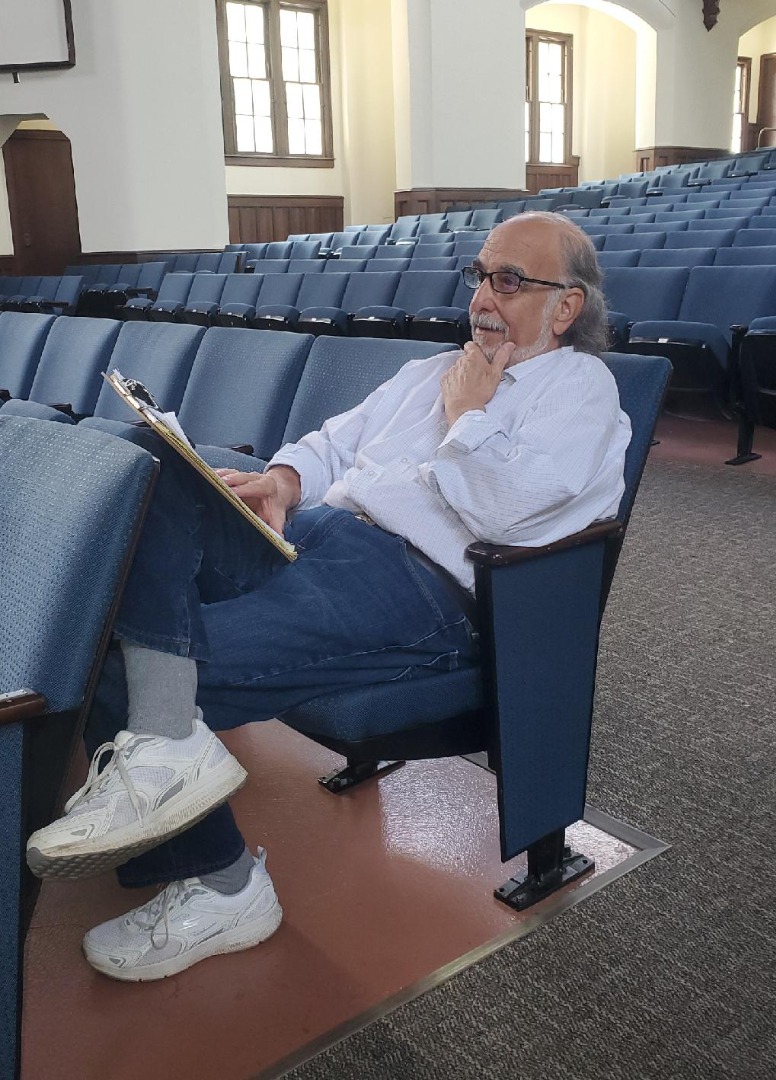
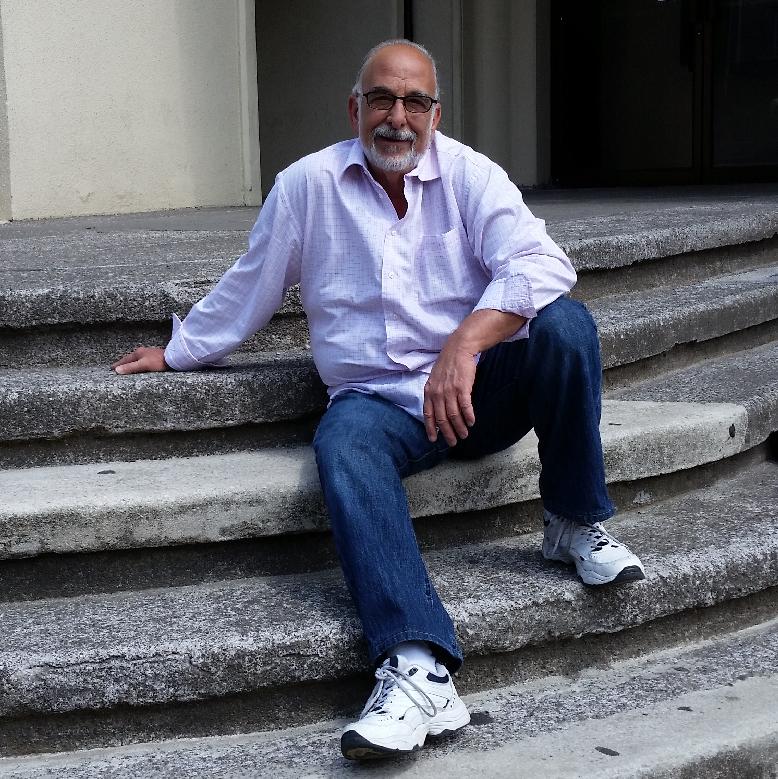
My love for space came at a young age. Born in 1952, I was a child of the space program. I can vividly remember being in the 3rd grade and the teacher wheeling in a TV to watch Alan Shepard go into space. There was a kid in the class that ran to the window and screamed "I can see it"! This was on Miami Beach, Florida, so I'm certain he couldn't. But this event and the ones that followed cemented my interest in Science, Astronomy, astrophysics, and Space Travel. I was hooked! So I have read a ton of Sci-Fi my whole life, and I love space Sci-Fi movies, all of them. My favorites; Silent Running, Forbidden Planet, Robinson Crusoe on Mars, 2001 A Space Odyssey, Ad Astra, Sunshine, Serenity, Contact, Close Encounters of the Third Kind, The Day the Earth Stood Still, Interstellar, The Martian, Gravity, Blade Runner, Total Recall, Avatar, and of course Star Wars and the original Star Trek, and So So many others, including my favorite THX 1138. I was born just a little too late to be a part of the space program and I did not follow a career in aviation so I never had the opportunity to join in, and now I'm too old at 74, but it has always held a major pursuit in my thinking and my heart. I did get the opportunity to attend the only Apollo mission launched at night and the final Space Shuttle launch. These things are the reason I joined this flight, the Infinite Flight, to send my DNA, a lock of my hair, and my thoughts into orbit around the sun, to remain in space for all time. It was my intention originally to purchase this trip for after I had passed, but I survived my illnesses, and now the flight that I wanted to be on is going to launch while I’m still alive! And I’ll be there….
I attended the University of Florida in the 1970s and graduated in 1976 with a BSBA Degree in Accounting. I never intended to be an accountant. But I knew I wanted to be an entrepreneur/businessman, so I wanted a background and understanding of accounting to enhance my business acumen. And to prevent anyone from being able to deceive me! Before graduation, I was nominated and inducted into Florida Blue Key Honor Fraternity for my service to the University of Florida, the State of Florida, and the Gainesville community, a very distinguished honor society in the State of Florida for which I am very proud!
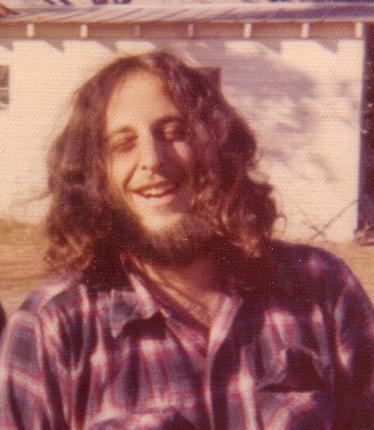
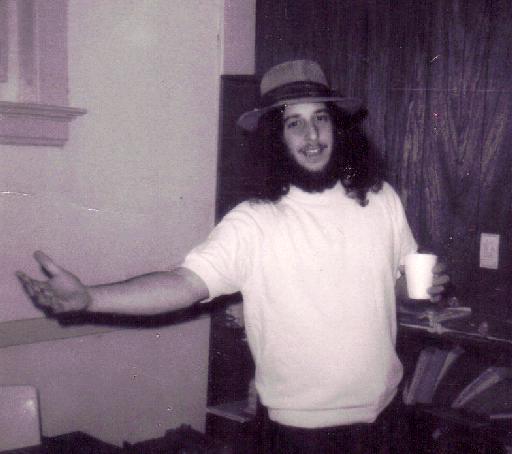
I was a child of the 1960's and very involved in the Counter Culture revolution, a true hippy. Somehow I got involved with and knew people like Timothy Leary and Wavy Gravy. I was also a serious protester of the Vietnam War. I then became involved in producing rock concerts and did so for 7 years in the 1970's, mostly at the University of Florida. I was the person who discovered Tom Petty, playing in bars, fraternity houses, and high school gymnasiums, and the first to present in concert in front of thousands of adoring fans. This was during my college year,s and I produced shows featuring such bands as The Eagles, Bob Dylan, Joan Baez, Roger McGuinn, The Rolling Thunder Review Tour, New Riders of the Purple Sage, The Allman Brothers, James Taylor, Chicago, Dizzy Gillespie, The Beach Boys, Jimmy Buffett, Steven Stills, and many, many other groups and musicians of the day. My most infamous show at the University of Florida was the Annual Halloween Masquerade Ball, beginning in 1970, with 10,000 students all in custom “college humor” homemade costumes, and the show went on until 1991- 22 years!
I moved on from show business after graduation and went with Revlon. Originally an accountant, I quickly moved into data processing. When Revlon moved me to Silicon Valley, well, that was it. I had no formal training in computers and self-taught myself electronics and digital computing. I was somehow a natural, and it came naturally to me; I can't explain that. I left Revlon and founded a computer design, manufacturing, and sales company. I engineered the fastest bleeding-edge personal computers, mostly for the scientific and engineering community. My customers included NASA, the Woods Hole Expedition, Sandia National Labs, Yale University, and the like. My 386 STORM motherboard held the title of the fastest 386 personal computer ever produced. Ideas that came to me are still found in today’s electronic devices, including computers, tablets, and cell phones. If it is memory storage in a computing device, I had a part in why it is easy for you to install it, and in other things.
Once personal computers became a commodity, I left Silicon Valley during the economic recession of the early 1990's and returned to Miami, Florida. I arrived in Miami just 3 days after Hurricane Andrew; what a trip that was! I brought the Internet with me from California, where I had been involved in its first uses and development. I founded the first Internet Service Provider in South Florida, ICANECT. I remained involved in the Internet and went on to become a Senior Vice President of IT at a dot-com on Wall Street, Internet Financial Network, which provided investment info and government SEC data to Wall Street firms. I had an office on the 35th floor of Tower One in the World Trade Center. I was not there on 9/11, and all my co-workers survived the catastrophe.
After the dot-com crash of 2000, I left the computer industry behind and went on to other things. I continue to work promoting music concerts in Gainesville, Florida, volunteering at The Heartwood Sound Stage. From the beginning of my time producing concerts, my primary objective was to bring people together in a musical environment to promote fun and togetherness, to share life, and to experience the oneness we all share as human beings. As I said, after my work in computers, I moved on to less important things, but I remained a true believer in the future of Space TravelFutureonomy and Astrophysics & Space discovery—all self-taught. I study the discoveries in these disciplines and continue to follow the various programs every day. It is my FIRM belief that space is the future, and I promote it to people every day.
I am dedicating my flight in the Solar System to my grandson, Ezra Charles Goldstein, in my hope that he embraces space and travels off the Earth someday to seek a future among the stars.
Ad Astra Per Aspera
*****
Counter Culture of the 60's & Rock & Roll FOREVER!
"We are often called “the elderly,” but that quiet label hides a truth most people rarely pause to consider: we are the last living witnesses of a world that no longer exists.
If you look closely, you might notice gray hair, slower steps, or the quiet patience that time alone can teach. But if you truly listen to our stories, you will discover something far more extraordinary. We are not simply older people moving through the final chapters of life.
We are the survivors of one of the most breathtaking transformations in human history — a generation that walked from the slow, deliberate rhythm of an analog world into the dazzling speed of a digital one without ever losing our sense of humanity along the way.
Our journey began in a very different place.
Many of us were born in the 1940s, 1950s, and early 1960s, when the scars of World War II were still fresh across Europe and Asia and the world was slowly learning how to hope again. Cities rose from rubble. Families rebuilt lives after years of uncertainty. Childhood unfolded in ways that would feel almost unrecognizable to younger generations today.
Our toys were simple: marbles played in dusty yards, hopscotch drawn on cracked sidewalks, checkers and cards gathered around kitchen tables while the smell of dinner filled the house. When the streetlights flickered on in the evening, it was the universal signal that childhood adventures were over for the day and it was time to go home.
There were no smart phones, no streaming videos, no endless scroll of digital distractions. Instead, we built our memories in the real world — with scraped knees, laughter echoing down neighborhood streets, and friendships that formed face to face, without the mediation of screens.
Music became one of the defining soundtracks of our youth. The 1960s and 1970s arrived like a wave of color and rebellion. We watched culture shift around us, carried by electric guitars and voices that dared to question the world.
For many of us, gatherings like the legendary Woodstock Festival of 1969 (I was there!) symbolized something powerful: the belief that peace, music, and community could reshape the future. Hundreds of thousands of young people stood together in muddy fields, listening to artists who poured raw emotion into towering speakers known as the Wall of Sound. Those concerts were not merely entertainment; they were moments when strangers felt like a single generation singing the same hope under an open sky.
Education looked different then, too. Our notebooks were filled with handwritten notes carefully copied from chalkboards. Research required patience, long hours in libraries, and stacks of heavy books rather than a quick internet search. We learned to slow down and think through ideas because information did not arrive instantly. Mistakes were corrected with erasers and ink, not with the click of a delete button.
Love carried a different rhythm as well. We fell in love while vinyl records spun on turntables and cassette tapes clicked softly inside plastic players. Music became the background to first dances, long conversations, and dreams about the future. Those relationships grew into marriages, families, and lives built step by step through the 1980s and 1990s — decades that saw technology begin to reshape the world around us.
Yet nothing compares to the bridge our generation has crossed. We are the only generation to have experienced an entirely analog childhood and a fully digital adulthood.
We remember waiting days — or sometimes weeks — for handwritten letters to arrive in the mail. We remember rotary telephones and party lines where neighbors could accidentally overhear conversations. Communication required patience and anticipation. Today, we can see the face of a loved one across the ocean instantly on a screen small enough to fit in a pocket.
The world changed in ways few could have imagined. We watched humanity land on the Moon in 1969, a moment when millions of people sat in living rooms staring at black-and-white televisions as Neil Armstrong took humanity’s first steps on another world.
We saw the rise of personal computers, the birth of the internet, and eventually the arrival of smart phones that placed entire libraries of knowledge in our hands. Machines that once filled entire rooms now exist on devices lighter than a paperback book. We moved from punch cards and mechanical tools to artificial intelligence and global networks connecting billions of people instantly. And through every shift, we adapted.
Our bodies carry the marks of the times we lived through as well. We grew up during fears of polio and tuberculosis, illnesses that once terrified entire communities before vaccines helped bring them under control. We witnessed the global challenges of pandemics and health crises across decades, including the recent silence and uncertainty of COVID-19, which reminded the world that resilience is still required in every generation.
Science itself transformed before our eyes. We saw the discovery of the structure of DNA in 1953, the decoding of the human genome at the turn of the century, and the early steps into gene therapy and advanced medicine. Transportation evolved from simple bicycles and steam engines to hybrid vehicles and electric cars gliding almost silently through city streets.
Few generations have witnessed such sweeping change. And yet, despite everything that evolved around us, certain things remain unchanged. We still understand the joy of a cold glass bottle of lemonade on a hot afternoon. We still remember the taste of vegetables picked straight from a garden. We still know the value of a long conversation that unfolds slowly without a keyboard or screen interrupting it.
Our memories stretch across decades. We have celebrated births, mourned losses, watched friends depart, and carried their stories forward. Those of us who remain share something rare: the experience of standing at the crossroads of history, holding memories from a world that younger generations know only through photographs and stories.
But we are not relics. We are living bridges. Our perspective reminds the modern world that progress does not have to erase wisdom. The speed of technology does not have to replace patience, kindness, or reflection. We remember what life felt like before everything moved so fast — and that memory carries quiet lessons worth sharing.
So when someone calls us “elderly,” we can smile. Because behind that word lies something extraordinary. We are the generation that crossed two centuries, witnessed eight decades of transformation, and walked from the age of handwritten letters to the era of artificial intelligence.
What a life we have lived. What a remarkable story we continue to carry. And if you belong to this generation, take a moment today to look in the mirror and recognize something powerful.
You are not simply growing older. You are living history. You are part of a generation that will always remain one of a kind. And perhaps, in the quietest and most meaningful way, you are becoming legendary."