He spent his life looking up at the stars, held back only by the limitations of biology, but that didn’t stop him from flying his plane, scuba diving, sailing his boat, or exploring Antarctica long before most. Today we remove those boundaries.
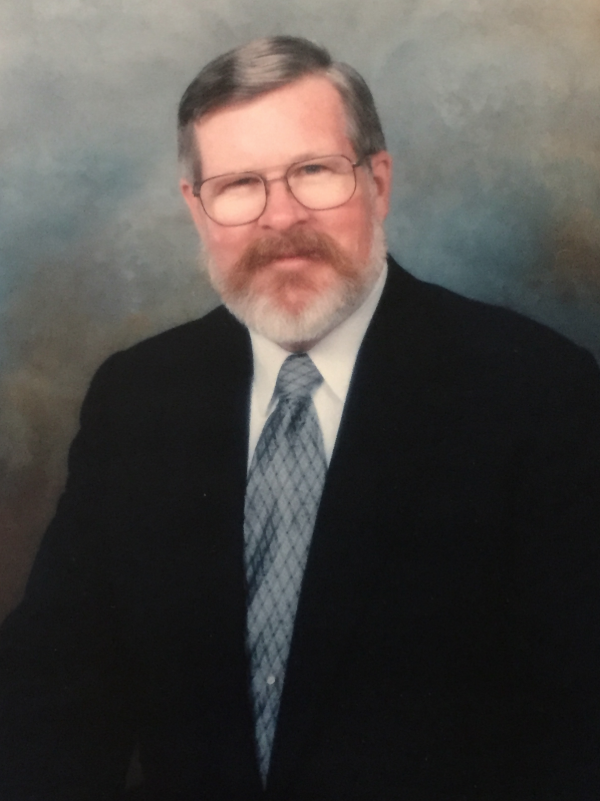
Barry Joseph Carroll always dreamt of becoming an astronaut, but because he was born blind in the left eye in 1944 and knew at various times in his lifetime that he could not meet the physical qualifications for traveling in space or to the Moon, he did the next best things—he explored the skies as a private pilot in his Mooney 201 airplane; he scuba dived all over the world including under the ice in Antarctica long before explorers frequented the continent; and through study of the sciences and the arts, he devoted himself to lifelong learning.
Barry was a devoted husband, father, and grandfather, and for all of his life’s accomplishments and adventures, his family will always remember him as a lifelong learner and avid reader with an encyclopedic memory who could teach them about virtually any subject, and as someone who enjoyed sailing and flying, playing dozens of musical instruments, photographing life, and singing folk music professionally. His wife Barbara always thought that the man she loved and married would share with her a most interesting and adventurous life, and he did.
At various times in his life Barry might reasonably have been described as a businessman, video producer, advertising professional, farmhand, explorer, technician, professional musician, entrepreneur, pilot, crime fighter, risk manager, educator, tinkerer, scientist, sailor, scuba diver, salesman, engineer, computer programmer, operations research consultant, auditor, handyman, gardener, wedding planner, genealogist, historian, politician, busker, homebuilder, deliveryman, philanthropist, banker, real estate broker, author, and bureaucrat. This list does not include some of the summer jobs he had, including working in a poultry processing plant and shoveling behind burros and Shetland ponies!
When he was a 7-year-old Cub Scout, Barry visited the Adler Planetarium in Chicago, where his photograph was taken with several scientists who gave him the first ticket to the Moon! He was looking through a high-powered telescope, keenly investigating the planets. This photo appeared in the Chicago Tribune, and the experience inspired him to study math and physics so that he could explore the world by any means possible. He began scuba diving in high school and met the love of his life, Barbara Pehrson. Later while he was a student at Boston College, he taught scuba diving and became a professional musician playing the guitar and piano in New York City and Boston.
Then, as a student at Great Books College, Shimer College, he studied abroad at St. Claire’s Hall, Oxford, where he proposed to Barbara by letter, daring her to come to England and marry him. They married in England, and while he was a student at Harvard Business School, they had the first two of their five children (Megan, Sean, Deirdre, Colleen, and Oona). They soon moved to Lake Forest, Illinois, and he began working for a musical instrument manufacturing company in Chicago and joined the board of the Lake Forest Symphony. He served on several university boards in the Chicago area as well. He and Barbara would often travel with their children or alone, via his airplane or sailboat. His most noteworthy trips were to all six continents, the northern and southern icecaps, the five largest countries, and numerous others down to Andorra, Monaco, San Marino, Nepal, Guyana, Belize, and the Caribbean islands, and to most of the states in the union. He also enjoyed spending time with his parents, children, and grandchildren on Martha’s Vineyard island, Massachusetts and Palm Beach, Florida.
In 1984, Barry accepted an appointment by the President’s Commission on Executive Exchange to serve for a year under the Reagan Administration as Special Assistant to the U.S. Secretary of Education. During this time, he authored several books and got to know people at NASA, including Captain James Lovell of Apollo 13, who also lived in the same town. His two eldest children recalled his excitement telling them about when he audio-taped and photographed them in 1969 in front of the television when Apollo 11 first landed on the Moon.
Barry also went on a scientific expedition with NASA mission-scientist astronaut Philip Chapman and several other scientists to an unusually dry valley in Eastern Antarctica in January 1989 to search for mineral resources while scuba diving under the ice. He employed hovercraft and helicopters to photograph the terrain and wildlife. His passion for numerous photography projects spanned a variety of scientific and industrial subjects over four decades. He also produced dozens of films on very diverse subject matter, and applying his love for writing, he was the author of several publications. His family remembers him always having a book or a magazine in hand, from classical literature to sacred texts and scriptures to Scientific American and specialty science magazines.
In his 2018 autobiography, Barry described his own life in the following words:
“In brief, I have lived an extraordinary rich and fast changing time and drunk in many of the opportunities and joys and experiences that any one person might ever expect in a number of lifetimes. I have chased shrimp boats and freight trains in a helicopter, hanging by just a seatbelt 500 feet over the water in steep banked turns, filmed oil drilling platforms in the Gulf of Mexico, shot ducks in the alligator-lined bayous of Louisiana, “slipped the surly bonds of earth” in my light airplane, dove to the deepest depths of Lake Geneva, and nearly died from asphyxiation in a grain dryer. I have mostly owned and driven/flown/sailed ten motorcycles, a wide range of tractors with up to 12 gears, innumerable antique cars, five or more types of light planes, a Bell 206 helicopter, many sloops and ketches, a hovercraft and a locomotive.”
Barry was an adventurer and an explorer, a loving husband, father, son, brother, and grandfather who was taken from us too soon, but he was ultimately a lifetime student, a polymath, and true Renaissance man. Also from his autobiography:
“What each of us does with the life the fates have suffered us to have is the measure of our worth. Did we take joy in learning? Did we take pride in our work? Did we love without condition? Did we treasure and respect our lives and that of other sentient beings? Did we seize opportunities and open doors for others with less opportunity to fulfill their potential? Did we share our gifts? Did we listen to the social conscience that hundreds of thousands of years of surviving in a challenging and threatening world have bred into us? Did we take a long-term view of how to achieve the betterment of our fellow man? The answers to these questions are all that will echo down the halls of time when memory of us fades and dies with our kin, and our remains are consigned perhaps to a tank or to the earth, and finally stardust.”
Family members marvel at what Barry Carroll accomplished in his lifetime, how he left his mark in so many areas, and how he and Barbara shaped their lives and gave their children and grandchildren opportunities beyond most. “Dad loved and believed in us. That is the greatest gift—and the price you pay for having such an extraordinarily talented and gifted father—you get the wonderment, mentoring, the joy, the tender moments, and you also get the tears in the end too.”
As we honor him and celebrate his life, we aren’t just sending his complete human genome into the cosmos; we are finally giving an astronaut his wings to fly indefinitely into deep space. He may have seen the world through one eye, but today he sees the universe with none of the old restrictions. Universe was the last word he spoke to Barbara perhaps a final acknowledgement of existence, consciousness, or the cosmos.
Safe travels, Barry/Dad/Papa. We love you.