This soil is basically stardust, you know.
Even in his garden, geologist John W. Taber liked to invite speculation or controversy by introducing such science-based whimsy into the conversation. He loved the Earth and thought of it as an immense arena for examination, study, appreciation, reflection, and wonder. His delight in regarding humble substances as celestial material was infectious.
On February 23, 1997, at age 81, our husband, father, and grandfather, John Taber, died at Hamilton, Montana. A fighter to the end, he had undergone four major heart surgeries in the last sixteen years.
John was born at Klamath Falls, Oregon, on September 21, 1915. He spent his youth in the Northwest where his family moved frequently, inventively surviving during the years of The Great Depression. He worked his way through Washington State University, marrying his college sweetheart Helen Robards in 1938 while still in school. On a study break, he found work as an underground mine mucker which readily convinced him of the need to return to school for his professional degree in Mining Geology.
Mr. Taber began his career as a junior engineer with the U.S. Bureau of Mines. He was selected by that agency for its strategic minerals research and exploration program during World War II to locate and provide mineral resources critical to the war effort. After the war, he became chief examining engineer of the Northwest Region of the Bureau of Mines.
In 1952, Mr. Taber found his life work in Hamilton, a small town in the scenic Bitterroot Valley of Montana where he was a partner in the Crystal Mountain Mining Company. This property became the largest open pit fluorspar mine in the world at that time. The concentrated product, fluorite, was a flux in the smelting process of steel. Among other things, it also was a component of ceramic materials used in rocket nose cones. Scandium, a rare earth mineral by-product extracted from the mine tailings, later was found to be valuable for scientific research in laser technology.
In his late forties, John earned a private pilot's license which offered among other things a chance to view the land from a new perspective. He extended his insatiable fascination with the Earth to the origins of celestial bodies and their relationship to this planet. In meditative moments, he was fond of studying the luminous night sky to speculate on the almost incomprehensible concepts of space, time, and matter. From community service connections teaching Earth science and geology for adult education programs, John became consultant/counselor to local rockhounds and hobby-prospectors.
Several members of John's extended family were military careerists with connections to rocket/missile technology and NASA. Following their work fueled his interest in related technological innovations. He was a staunch defender and proponent of the space program. His family and friends recall his appreciation for the dramatic peripheral influences of space research on modern life.
Those close to John share a familiar image of him turning a rock sample in his large, capable hand, scratching at it with the tip of his handy pocketknife blade to determine its relative hardness, peering through his twenty-power hand lens, then sharing his observations in a rich story of the rock's probable origin.
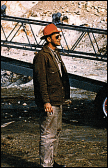
John W. Taber is survived by wife, Helen, daughters Lynn and Jeannie, sons-in-law Bob and Ken, grandchildren Kirstin and Brian, plus Cougar the cat. We all knew him as a man of many "hats" and talents: Geologist, Fluorspar Mine Manager, and Man-Who-Could-Figure-Out-How-to-Repair-Just-About-Anything. He leaves us with a wealth of tools and insights.
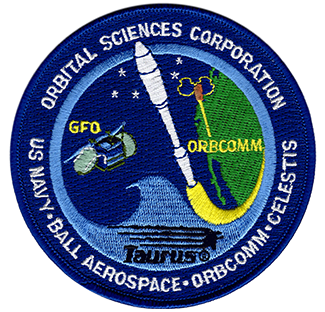
GEOLOGIST JOHN W. TABER RETURNS TO STARDUST ON THE ULTIMATE FIELD TRIP - SECOND CELESTIS LAUNCH, THE AD ASTRA FLIGHT.